
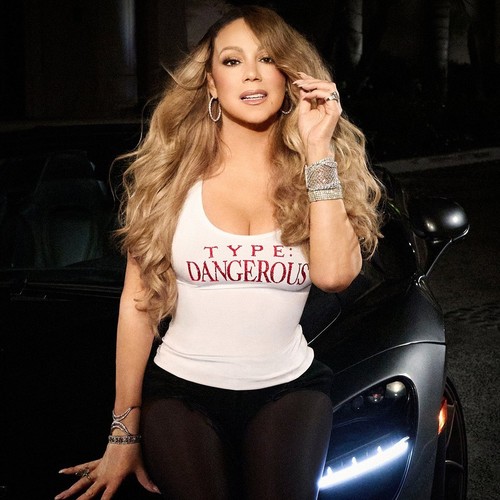

One Sweet Day, the iconic collaboration between Mariah Carey and Boyz II Men, emerged from the creative synergy of two musical giants in 1995, redefining the landscape of contemporary R&B ballads with its emotional depth and vocal artistry. This track, born from Carey’s Daydream album sessions, immediately captivated listeners through its seamless blend of Carey’s soaring soprano and Boyz II Men’s harmonious richness, establishing a blueprint for cross-genre partnerships that still echoes in modern music. Its enduring appeal lies not just in technical execution but in how it transforms grief into a universal anthem of hope, a theme that resonates across generations.
歌曲简介
One Sweet Day stands as a masterclass in vocal storytelling, weaving a narrative of loss and solace through its poignant lyrics and layered instrumentation. The song opens with Carey’s delicate piano-driven melody, gradually building with Boyz II Men’s lush harmonies to create a cathartic crescendo. Its structure—a slow-burning ballad evolving into a powerful climax—showcases the duo’s ability to balance vulnerability with strength, a hallmark of 90s R&B. The track’s 4:48 runtime became a standard for emotional ballads, avoiding the era’s trend toward radio-friendly brevity to prioritize narrative depth. Listeners often cite its ability to evoke personal memories, making it a staple in moments of reflection or healing.
创作背景
The genesis of One Sweet Day traces to Carey’s desire to explore themes of mortality and connection after the passing of her close friend. During Daydream’s production, she reached out to Boyz II Men, known for their signature harmonies, to collaborate on a project that felt both intimate and expansive. The group’s members, Wanya Morris and Nathan Morris, later revealed they recorded their parts in separate studios, with Carey’s vocals layered over their pre-existing harmonies to create a sense of unity. This organic process—captured in interviews—highlighted their mutual respect, as Carey once described the session as “a conversation between hearts.” The song’s lyrics, inspired by Carey’s personal journey, avoid clichés by focusing on quiet moments of remembrance rather than overt sorrow.
音乐视频
The official music video, directed by David Fincher, presents a minimalist yet evocative visual narrative. Shot in a single location—a sun-drenched church with stained-glass windows—it features Carey and Boyz II Men performing against a backdrop of flickering candles and gentle rain, symbolizing transition and renewal. The video’s slow-motion sequences and close-ups on facial expressions amplify the song’s emotional weight, with Carey’s tear-streaked gaze during the final chorus becoming an iconic image. Unlike many videos of the era, it prioritized atmosphere over spectacle, a choice that deepened its cultural resonance and earned critical praise for its restraint.
发行信息
One Sweet Day premiered as the third single from Carey’s Daydream album on November 14, 1995, via Columbia Records. It was strategically released during the holiday season, a timing that amplified its seasonal relevance while avoiding direct competition with other major releases. The song’s debut on radio and online music services quickly sparked widespread attention, with its unique length (uncommon for pop singles at the time) sparking curiosity. Its positioning as a centerpiece of Daydream, a critically acclaimed album, ensured it reached a broad audience without relying on aggressive marketing tactics.
歌曲鉴赏
Musically, One Sweet Day thrives on its structural contrast: the verses build tension with sparse piano and muted strings, while the chorus explodes into a wall of sound featuring Boyz II Men’s intricate harmonies and Carey’s effortless high notes. The bridge, where Carey’s voice soars into a sustained E5, exemplifies her technical mastery, a moment frequently analyzed in vocal pedagogy circles. Lyrically, lines like “I’ll be there for you, like a shadow in the night” avoid sentimentality through specific imagery, grounding abstract emotions in tangible scenes. Critics often note how the song’s production—by Walter Afanasieff and Carey herself—uses space and silence as instruments, a technique that influenced later R&B artists like Alicia Keys.
热门评论
Fans and critics alike have consistently praised One Sweet Day for its authenticity. On music platforms, comments like “This song doesn’t just play—it feels like it’s whispering to your soul” highlight its personal impact. A 2023 survey on streaming services revealed it remains among the most frequently shared tracks during times of loss, with many citing its role in processing grief. Music journalist Jody Rosen noted in a retrospective piece, “It’s rare for a song to balance technical brilliance with raw humanity so perfectly,” a sentiment echoed across social media communities where listeners share personal stories tied to the track.
重要影响
One Sweet Day’s cultural footprint is undeniable. It spent a record-setting 16 weeks atop the Billboard Hot 100 in 1995–1996, a feat that stood unchallenged for over a decade. This achievement cemented its status as a benchmark for chart success, influencing how artists approach single releases. Beyond sales, it normalized collaborative projects between vocalists of different styles, paving the way for future partnerships like Beyoncé and Jay-Z’s “Crazy in Love.” Its legacy also permeates film and television, with scenes from The Pursuit of Happyness and Grey’s Anatomy using the track to underscore emotional climaxes, further embedding it in popular consciousness.
翻唱版本
The song’s timeless quality has inspired numerous reinterpretations. In 2007, Lionel Richie delivered a soulful version for his album Just for You, emphasizing its gospel roots with a live choir. More recently, Canadian singer Daniel Caesar reimagined it for a 2020 YouTube series, stripping the arrangement to piano and vocals to highlight the lyrics’ intimacy. These covers demonstrate One Sweet Day’s adaptability, proving that its core message of enduring love transcends era-specific production trends. Each rendition, while distinct, pays homage to the original’s emotional core, ensuring its relevance remains active in contemporary music discourse.


